
“Use your correct hand.” Most of us have heard it before we could read. At the dinner table, at an aunt’s front door, in the front row of a Grade 1 classroom. A small hand reached out, and an adult voice corrected it, as though the other one was bad.
On November 25, 2026, the African Left-Handers Foundation (ALHF) will deliver its inaugural lecture at the University of Johannesburg (UJ). The date is fitting. It is also the first day of the 16 Days of Activism for No Violence Against Women and Children, a campaign that asks us to look closely at the harm we have learned to call normal. For generations of left-handed African children, some of that harm began with a smack across the knuckles.
The hand we were told to correct
For many African children, the left hand has never been simply a hand. It carried questions of manners, respect, cleanliness, and belonging. A child who receives a plate with the left hand is admonished. A child who greets an elder with it is corrected. A child who picks up a pencil with it is, too often, told to put it down and try again with the “right” one. Some were smacked. Some had the hand tied behind their backs. Some simply learned, quietly, to be ashamed.
However, beneath the prejudice and stigmatisation of left-handed children lies ignorance. Left-handedness is not a defect. It is not a bad habit. It is not disobedience. It is how a body and a brain are organised long before a child walks into a classroom. The world’s biggest study of left-handedness, covering more than 2.3 million people, found that 10.6 per cent of us are left-handed. Roughly one in ten.
The missing left-handers
A 2026 study by Karstadt and his colleagues found that among people of European descent, 11.12% were left-handed. Among people of sub-Saharan African descent, the figure fell to 7.71%. The researchers point to culture, including pressure against using the left hand, to explain the gap. The study indicates that Africa does not produce fewer left-handed children. We correct more of them, largely because of cultural stereotypes.
The evidence of that pressure is not hard to find. In a widely cited study in Malawi, 96.2% of guardians and 92.7% of teachers insisted that children use the right hand. A 2015 study in a south-east Nigerian city found that many mothers still held negative beliefs about left-handed children. A 2022 University of Ghana study documented teachers punishing, caning, and verbally abusing natural left-handers to force the switch. The missing left-handers did not disappear. They were corrected.
What the classroom costs
Learners pay the cost. Picture a left-handed girl in a crowded classroom, elbow to elbow with a right-handed neighbour at a shared double desk, which the Ghanaian study named as a daily struggle. She drags her hand through wet ink. Her letters slant the “wrong” way. Her page looks untidy, so her mind is judged untidy too. Nobody showed her how to tilt the book. Nobody handed her scissors that fit her hand. Nobody told her teacher she wasn’t careless, only uncatered for. How many learners were marked “messy” when they were simply never taught? How many were called slow when they were fighting their own bodies? How many stopped putting their hands up at all?
Culture, carefully
This argument must be made carefully. Customs around the left-hand carry histories and meanings that deserve respect, and we do not write to mock them. Nor is the pressure uniquely African. Schools across Europe and Asia once forced left-handed children to write with their right hands, and colonial and mission schooling, with its drills of uniform penmanship, brought that same rigidity into many of our classrooms. The point is not to condemn culture. The point is dignity. A decolonial education asks a harder question of every inherited practice: does it protect a child, or does it humiliate her?
Who decided that one hand is clean and the other shameful? Who benefits when a child is taught to distrust her own body? Why do we keep correcting what was never broken? In South Africa, corporal punishment has been unlawful in schools since the South African Schools Act of 1996. Yet the quieter forms of correction, the sighs, the snatched pencils, the “not that hand”, rarely make it into our conversations about inclusion.
Inclusion lives in the details
This is why ALHF matters. In August 2025, the foundation and the Centre for Education Rights and Transformation (CERT) at the University of Johannesburg signed a memorandum of understanding to advance educational rights through inclusive education. The partnership grew out of CERT’s socially engaged research on marginalised learners in township schools, with a firm focus on foundational learning. The principle is simple: no child left behind. Not the child in the back row. Not the child in the rural school. Not the child who writes with the other hand.
Inclusion is not only a ramp at the school gate or a policy document on a shelf. It is a teacher who knows how to guide a left-handed grip. It is a classroom that seats children so their elbows do not collide. It is a parent who stops slapping the reaching hand. It is a school that asks, on the first day, “Which hand feels like yours?”
None of this is expensive. Teacher education programmes can include left-handed handwriting instruction at almost no cost. Foundation phase classrooms can make practical adjustments tomorrow. Families can choose curiosity over correction. And our inclusive education policies can name handedness plainly, so that no educator can claim it was never their concern.
The other hand also writes history
Left-handed Africans have always been here. They have farmed, healed, built, sung, governed and taught. They have shaped this continent’s story, often while being told they were holding the pen wrongly. The test of an inclusive classroom is not whether it tolerates a left-handed child. The test is whether she can write with the hand she was born with, without fear.
Both hands are good. Born left. Not wrong.
About the authors:
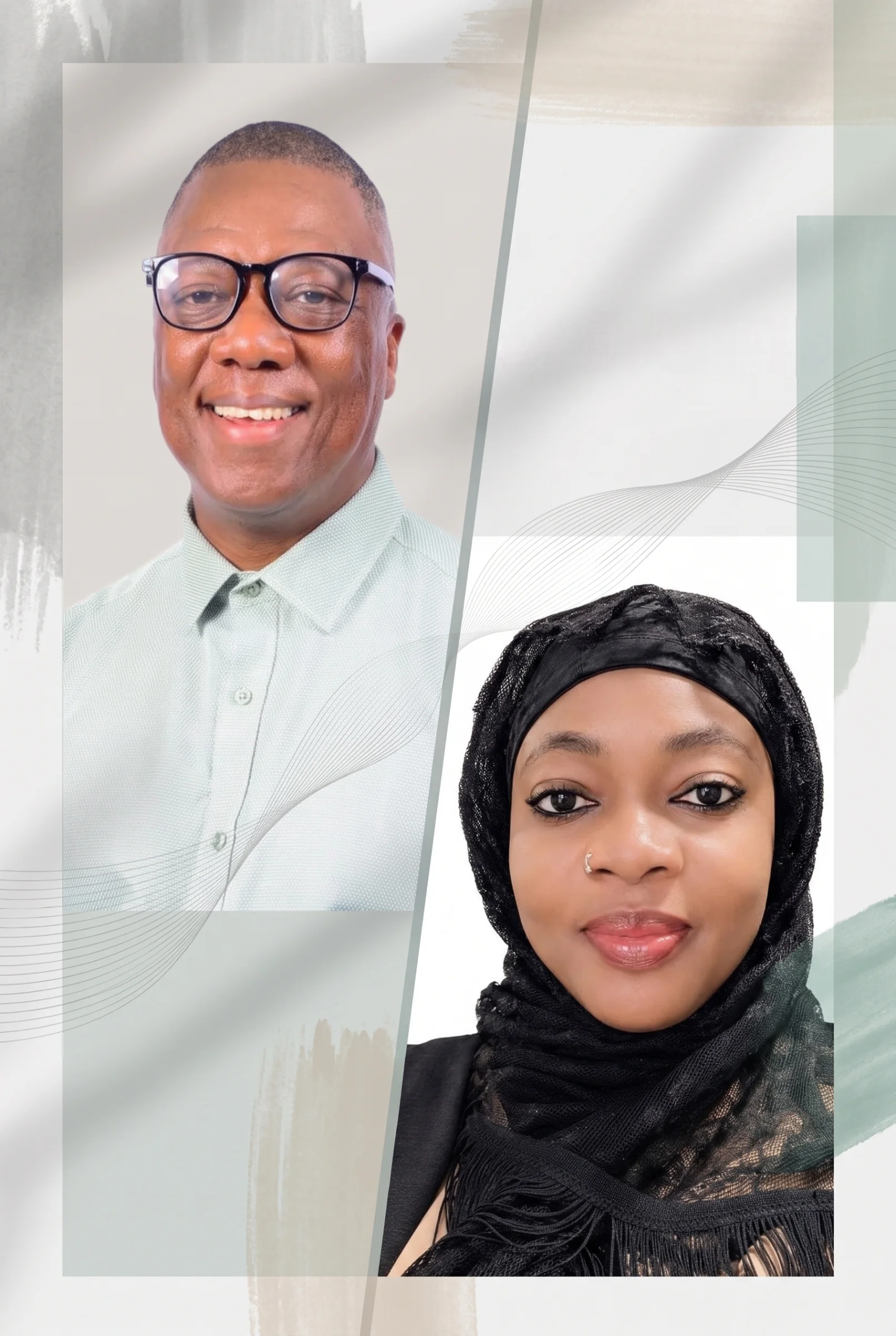
- Dr Maryam C Adewunmi is at the Centre for Education Rights and Transformation (CERT), Faculty of Education, University of Johannesburg.
- Mr Mandla Simelane is a South African Peacebuilder, Deputy Chairperson of the African Left Handers Confederation Initiative and African Left Handers Foundation, and a Research Associate at CERT